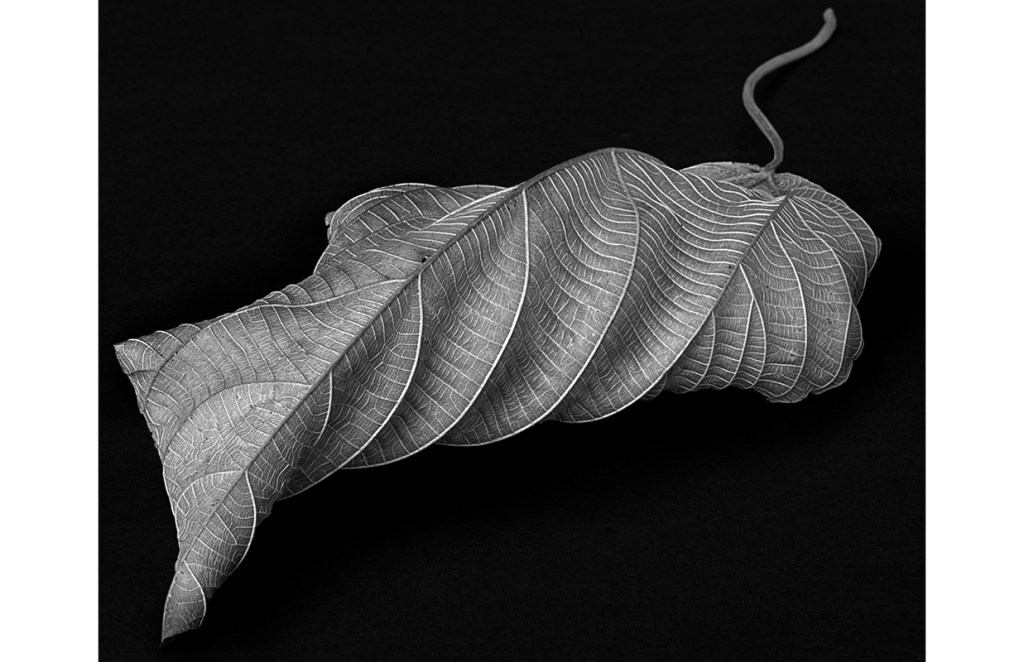
A project I started while I was in Brazil consists of photographing decaying leaves. Walking about my mother’s backyard, I noticed that the vegetation was very dry, contrasting with the lush, green forest of past years. Not wanting to miss out on the opportunity to photograph “something”, I decided to explore what was available. I think that it was a good decision, since the fall is about to start in the USA and plenty of material will be forthcoming.
A photography project, as I understand it, is a somewhat unified, cohesive body of work that employs the same concept, technique, subject, and or palette throughout multiple photographs. Working in projects can be an excellent way to improve one’s skills and explore a particular theme or style in greater detail. It also helps the photographer to remain focused and avoid being pulled in various directions like a leaf in the wind.
The subject in the photo above called my attention for its unusual shape, texture, and the intricate detail of the veins. I have not attempted to identify the tree it came from, but I know that it is a common tree in the Atlantic Forest. Compare and contrast this leaf with the Cecropia leaf from a previous post.
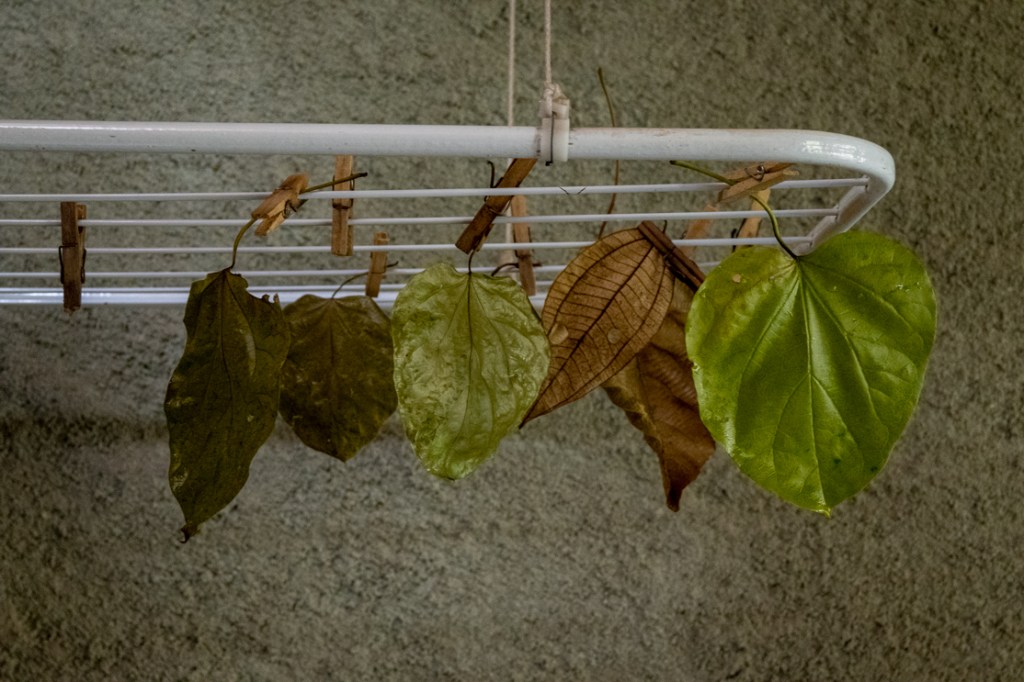
When photographing a subject from close, it is a good idea to wash or clean it first. Start with a setup as clean as possible, and avoid hours of cloning in post-processing. Furthermore, pieces of dust, dirt and hair cannot always be effectively removed from the photograph. After I collected the leaves from the ground, I washed them with water and left them to dry in a laundry rack.
For the background, I used a black cardboard I bought in the “papelaria” (the store where you buy paper in Brazil). It is important, when devising projects that might be executed away from one’s studio, to pick materials and tools that can be found practically anywhere. Black cardboard, white cardboard for reflection and diffusing materials like bubble plastic, thin sheets of tracing paper etc, will be the tools used for this project.
In Folhas secas, part two, I talk more about this project.


 It is all about the light
Leave a reply to Folhas Secas, part three – It is all about the light Cancel reply