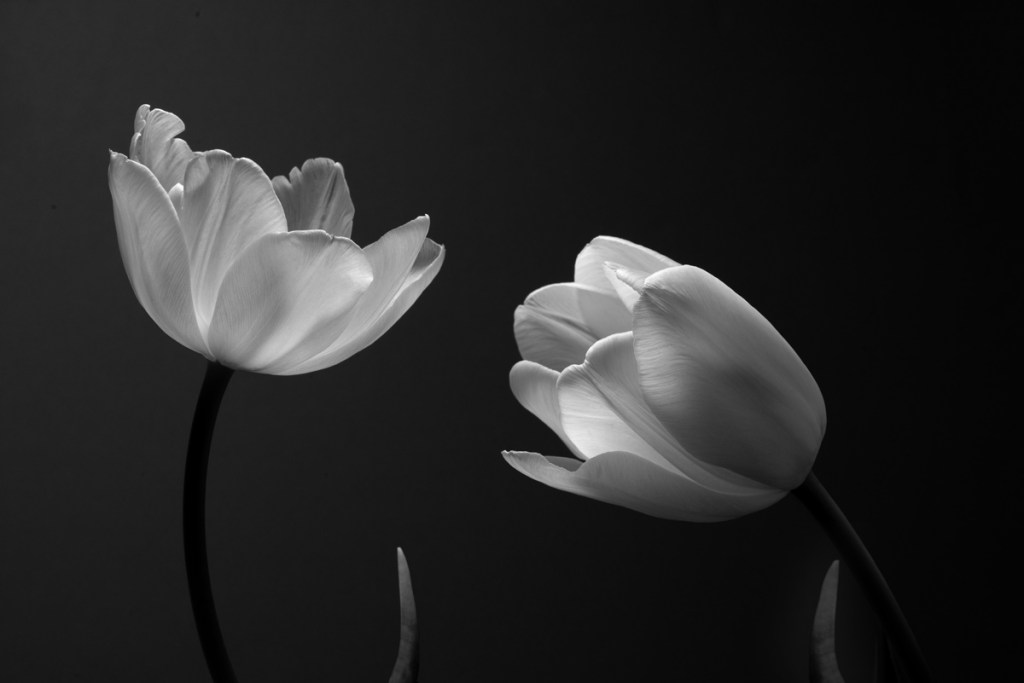
I has been a while since I last updated my progress on my project “Winter Tulip”. I made my first post about it in January, 2022 and my lastest post on the subject in March of that year. Since then, I have made some progress that warrants a report.
“Winter Tulip” has evolved into a story featuring the various stages of the life cycle of a tulip flower. It now includes 18 images, with a several additions taken in 2023, and can be seen here.
If you want to read more about the development of my series, keep reading.
The thread connecting the images
When doing a series, it is important to consider what is the thread connecting images to one another. In my last posts, I outlined some of those elements, which are elaborate and expand below:
- all images in this series portray a tulip, or part of a tulip
- the background is grey to black;
- I used a type of selective lighting;
- The images are printed on Hahneülle Photo Rag;
- The aspect ratio is 2X3;
- The concept behind it is the eternal cycle of life and death all living things are subjected to.
Although I initially had in mind a series completely in monochrome, I have added a few color photographs here and there to spice up the sequence a bit.
The technique behind the FEATURED PHOTOGRAPH
In my first post about Winter Tulip I showed my set up to photograph the flower buds. Progressing into the series, I decided to try a different technique for the open flower: turning the flower upside-down and placing the light source underneath of it.
The FEATURED PHOTOGRAPH (f/18, 1/1250, ISO 200 at 105 mm), repeated below for convenience, looks like it’s glowing from the inside. I have since deleted the photo of my set-up, but I will leave it up to my readers’ imagination, how to hang a flower upside down and put a flash underneath of it to photograph… I’m sure you are all smart enough to figure it out.

______________________________
Wall Art landscapes and miscellaneous
________________________________


 It is all about the light
Leave a reply to Alessandra Chaves Cancel reply