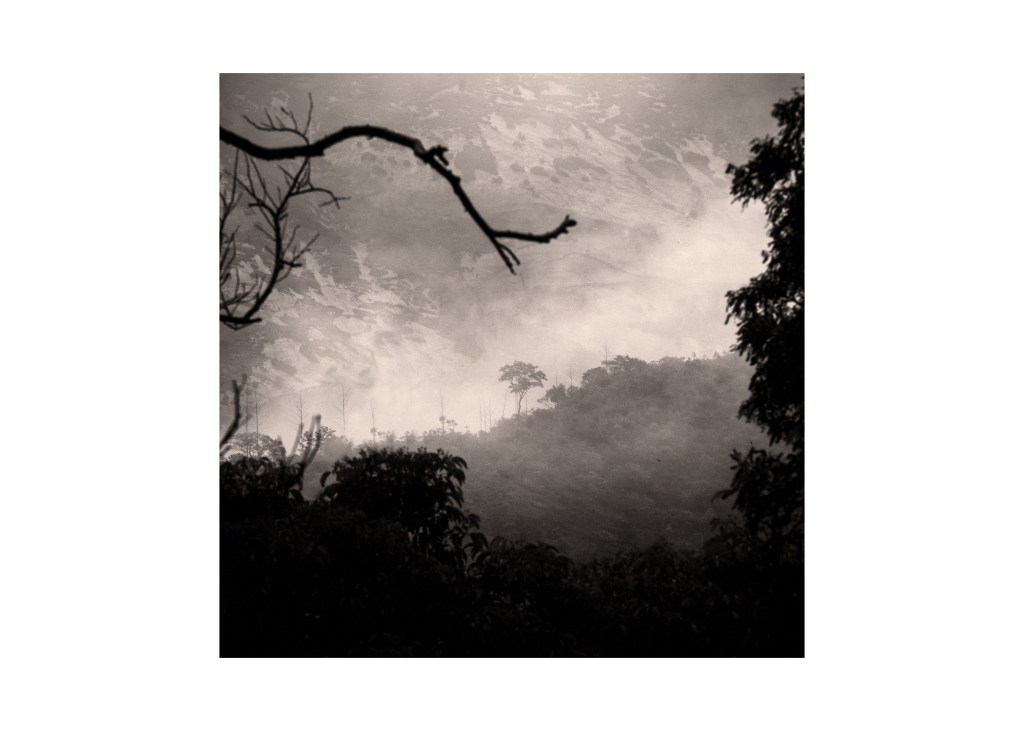
Last time I was in Brazil, it was the summer in the southern hemisphere, and the rainy season in Rio de Janeiro. It rained almost every day, sometimes the entire day, but some days the weather cleared for a few hours. Going on long, epic hikes high on the mountains looking for open clearances on massive rocks, as I had done previously, was out of the question (click here for my previous posts about photographing in the Atlantic Forest domain).
Problems, and their solutions
Photographing landscapes in the tropics can be specially challenging, particularly when the intention is to generate monochromatic images: first, haze is prevalent, which means that contrast is often low; second, there are few open spaces and lots of vegetation occluding the views, coupled with little order in a chaotic landscape; third, the soft, wet, muddy, vine- and litter-covered soil makes it difficult to use a tripod for stabilization.
Walking up and down the neighborhood of the family house in Petrópolis, between rainstorms, I encountered considerable fog and haze, low contrast, a soft, muddy soil, and lots of secondary growth (vines, branches, tall grasses) along trails and roads, which occluded the few potential compositions.
I was determined to come back home with at least a few images, and after a several attempts fighting nature and the circumstances, I decided to accept the reality of having to photograph with a high ISO to be able to relinquish the tripod, and to embrace framing in my compositions.
Example
I took the FEATURED PHOTOGRAPH on a rainy, hazy day with a 105 mm lens at f/7.1, shutter 1/250 s and ISO 650, handheld. The long focal length helped to get closer to the tree (which is across the valley) and to eliminate some of the clutter represented by the foreground vegetation
(When holding a long lens, do not forget to set the shutter speed at least two times higher than the focal length of the lens. For example, if you are at 100 mm, the shutter needs to be at least 1/200s. Personally, I don’t count on the lens’ image stabilization, but do have it on.)
In post-processing, I darkened the surrounding vegetation of the FEATURED PHOTOGRAPH to strengthen the frame of the main subject. The branch on top serves as a line leading the viewers’ eye all the way to the tree. Both the foreground vegetation and the branch are out of focus. This is fine by me, because the main subject (the tree) is in sharp focus and I don’t think that it’s necessary to see detail in the foreground in this case. Keep in mind, however, that others might disagree.
For the same of comparison, I add below a similar photo, taken on another day when it was raining, with the foreground vegetation in focus. I accomplished that by using photo stacking. I think that the detail in the foreground is distracting and takes away some of the mystery of the version I used as the lead photograph.
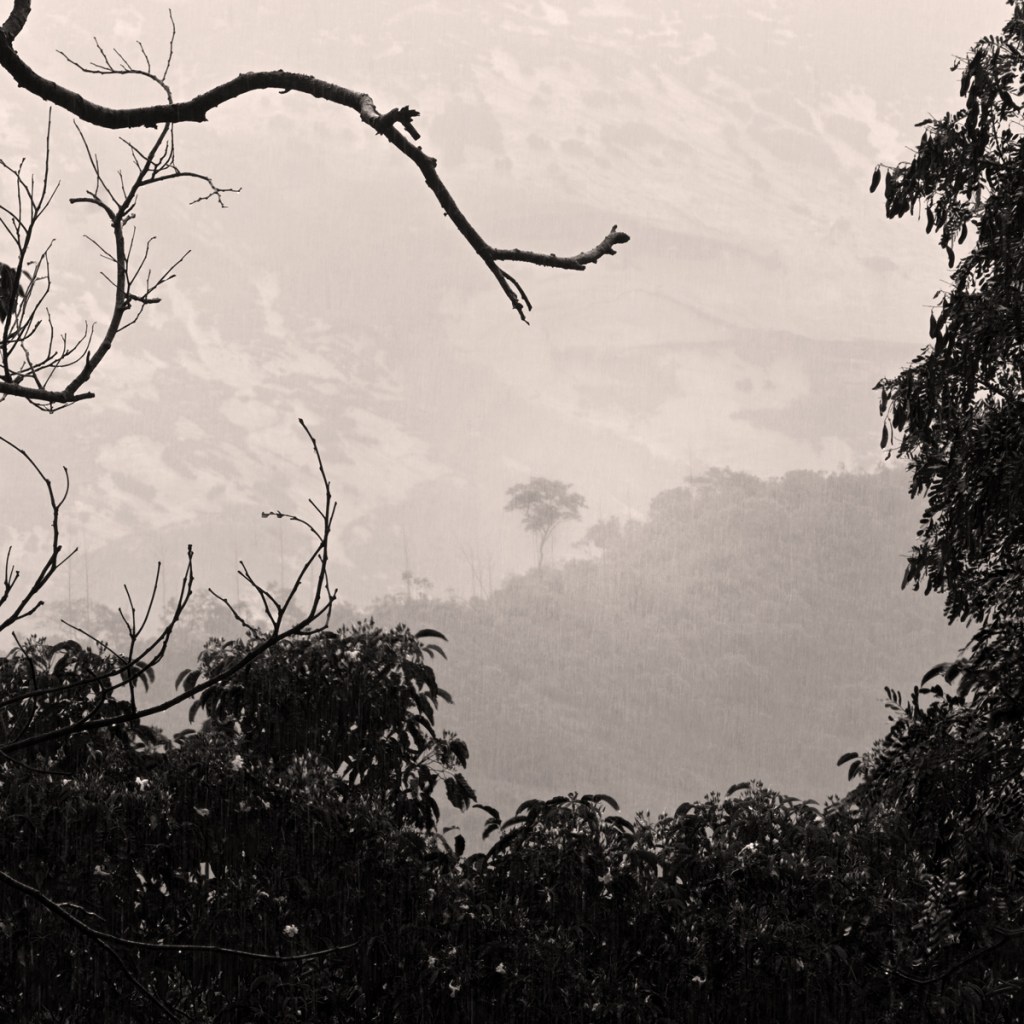
In order to give my image a vintage look, I added a warming photo filter and some grain in Photoshop. After fiddling with the crop ratio, I have concluded that 1:1 looks best.
______________________________
Wall Art landscapes and miscellaneous
________________________________


 It is all about the light
Leave a reply to Steve Gingold Cancel reply