Sometimes I like to rewrite and republish posts from the past that did not get a lot of views or attention.
This is one, about a photographers’ favorite: critique. On a previous post, I wrote tips about how a photographer can ask for critique and be more likely to receive meaningful feedback.
Although critique is fundamental to becoming a better photographer, it is important to keep in mind that constantly letting others tell you what to do and how to do it may not be desirable.
WHY, and WHEN, ASK FOR INPUT?
You seek critique when you want insight into how others perceive your work. It’s similar to asking someone to read something you’ve written—while you know exactly what you’re trying to say, a reader might not interpret it the same way. If they’re confused, you revise and ask again, “Does this version make more sense?”
In photography, others might notice details you overlooked. For instance, not long ago, an aspiring wedding photographer shared a proposal photo in a critique group. What stood out immediately to me was a trashcan awkwardly positioned behind one of the subjects’ heads. The photographer needed quite a bit of feedback before they even noticed it—bright red and all. That’s why getting multiple perspectives can be so valuable, especially when you’re starting out and trying to break into the field. On the flip side, if you’re an experienced photographer, confidence in your skills might blind you to flaws others can easily spot.
That said, there are also valid reasons not to seek critique. Which leads to the next question.
WHEN is it NOT appropriate to ASK FOR INPUT?
There are times—especially in the creative process—when seeking feedback isn’t actually helpful. Having a clear vision for a photograph or a series means you already know exactly how you want the final result to look. Once it’s complete, you ask yourself: “Does this match my vision?” If the answer is yes, you keep it. If not, you rework it. When staying fully aligned with your personal vision is your priority, then your own judgment is the only critique that really matters.
But how can critique get in the way of that vision? Constantly asking for feedback can lead to confusion. For instance, I once shared a main photo online and someone suggested I add grain. Because the suggestion was now in my head, I felt compelled to test it out—even though grain had nothing to do with my original idea. Their comment made me second-guess myself. This kind of thing isn’t catastrophic, of course, but repeated often enough, it can dilute your creative instincts.
That’s why some photographers avoid looking at other people’s work and deliberately don’t seek critique. Blocking out outside influence can help sharpen your own vision quickly and make it easier to stay completely true to it.
THE ROLE OF MENTORSHIP
Working with a mentor you respect and trust is one of the most effective ways to grow as a photographer through meaningful critique—without having to sift through unhelpful feedback from people who either lack expertise or disregard your artistic vision. A formal student-teacher relationship also puts you in a better mindset to thoughtfully engage with the guidance you receive. That said, finding the right mentor can be challenging. It needs to be someone who supports the development of your unique style and vision, not someone who simply wants you to imitate theirs.
WHERE DO I STAND?
When someone comments on my artistic work—whether I asked for it or not—I can’t help but take it into account. I ask myself, “Does this person have a valid point?” I do my best not to feel discouraged, and if I agree with the critique and it’s something I can adjust in the photo, I’ll make the change. That said, I rarely seek out feedback. Too much outside input tends to overwhelm me, and I sometimes end up abandoning a project or photo because I lose focus and inspiration.
In contrast, when it comes to the professional side of photography, I’m much more open to feedback. Back in 2020, I considered pursuing food photography and enrolled in a workshop. I shared every image I created in the course forum and followed the instructor’s advice closely. At times, it was disheartening—not getting full approval made me doubt myself—but over time, I noticed fewer corrections and started feeling more confident. Although I eventually decided not to pursue food photography, the critique I received in that setting taught me valuable lessons I now apply across different areas of photography.
If you’re a photographer or visual artist, how do you handle feedback? Do you find that it enhances your work—or does it interfere with your creative vision?
ABOUT THE LEAD PHOTOGRAPH
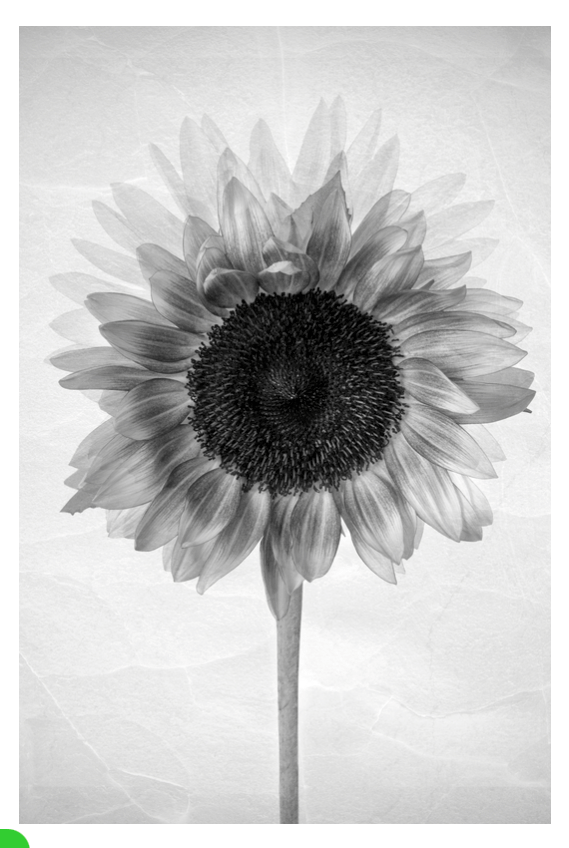
The lead photograph features a wilting sunflower on a white texture.

If you are not familiar with adding texture to your photos, and would like to learn more about it, watch How To Apply Textures In Photoshop 2020, by fellow photographer Howard Grill. If you would like to see how the FEATURED IMAGE was made, click on this link.
______________________________
Wall Art landscapes and miscellaneous
________________________________


Leave a Reply