I have definitely been distracted, and as a result of that, my photographic output has suffered. To worsen the situation, the light this winter hasn’t been good (no clouds, very dry), and the wind blows relentlessly on the weekends. Since I work full time, and the weekend is the only time when I can be about with my camera, not many photographs have happened.
I haven’t been completely lax about photography, however. Behind the scenes, I’m working with a friend on our first duo show featuring botanical photography. I will be presenting my black and white botanical work exploring the shape, form, mood, and lines of my subjects. More on that later.
The FEATURED PHOTOGRAPH
The FEATURED PHOTOGRAPH ( f/10, 1/200, ISO 800, @ 105 mm), repeated below for convenience, is a new addition to my “Dry Leaf” series. A portion of the series is available for purchase this season in my Autumn-Winter collection at in GeoGalleries.
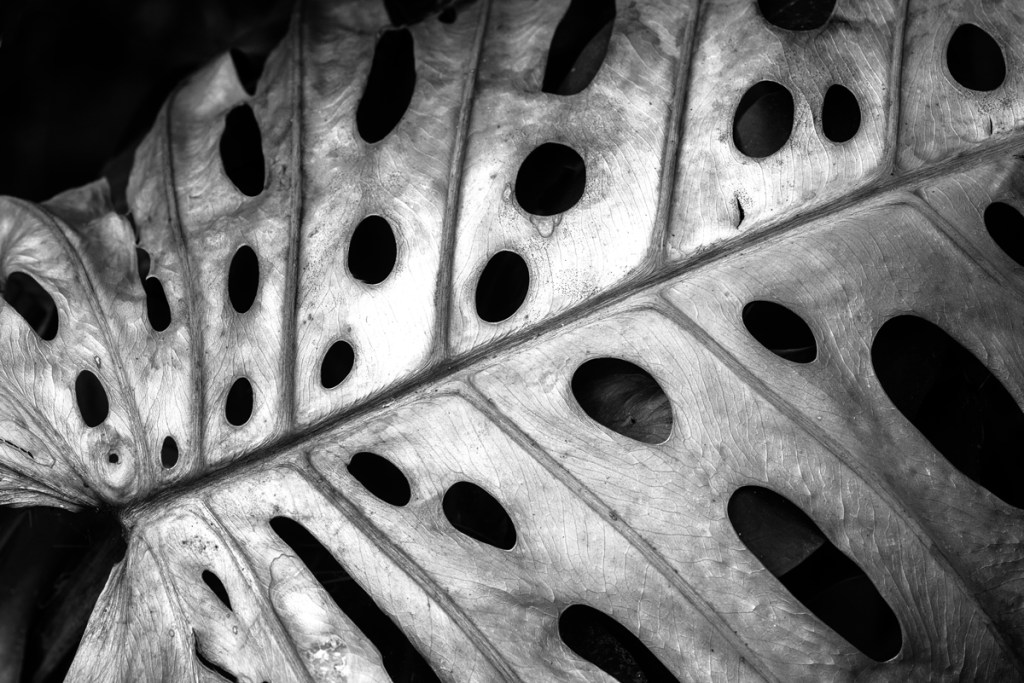
I took the photograph in the field when I was in Brazil last October. The photograph portrays a dry leaf of the Monstera deliciosa Liebmann. Commonly known as the Swiss cheese plant, it is a popular tropical houseplant prized for its large, glossy, and uniquely perforated leaves. Native to the rainforests of Central America, it thrives in warm, humid environments and can grow impressively large, both indoors and outdoors. Its aerial roots help it climb trees in the wild, while its distinctive leaves develop fenestrations as it matures, enhancing its striking appearance. In addition to its ornamental appeal, Monstera deliciosa produces edible fruit with a flavor reminiscent of pineapple and banana. Easy to care for, it prefers bright, indirect light and well-draining soil, making it a favorite among plant enthusiasts.
What’s in the name
Monstera deliciosa was named by the Danish botanist Frederik Michael Liebmann (10 October 1813 – 29 October 1856). Species’ names are binomial, meaning that they are composed of two names. The first one, capitalized, is the genus name. It is followed by the species’ epithet, which is not capitalized. Often, the binomial name is followed by the name of the person who described the species (Liebmann, in this case), and sometimes, by the year the species was described. Species names are always either in bold or in Italics, to differentiate them from the other words in a text.
The name Monstera deliciosa comes from Latin and reflects the plant’s striking appearance and fruit.
- Monstera: Derived from monstrum, meaning “monster” or “monstrous,” referring to the plant’s large, uniquely perforated leaves, which look almost unnatural or monstrous.
- Deliciosa: Meaning “delicious,” a nod to the plant’s fruit, which, when ripe, has a sweet, tropical flavor resembling a mix of banana, pineapple, and mango.
______________________________
Wall Art landscapes and miscellaneous
________________________________


 It is all about the light
Leave a reply to Alessandra Chaves Cancel reply