Breaking the Pattern: The Power of Off-Centered Photography in Repetitive Designs

Published by

on

As I reviewed the photos from my recent visit to the Berkeley Botanical Garden on May 25—a surprisingly productive day of photography—I came across a few images that caught my attention. One in particular was of a succulent’s rosette leaf pattern, a subject I seem to photograph almost every time I go. But when I considered posting it, I felt a familiar sense of fatigue, as though I’d seen the same image countless times before.
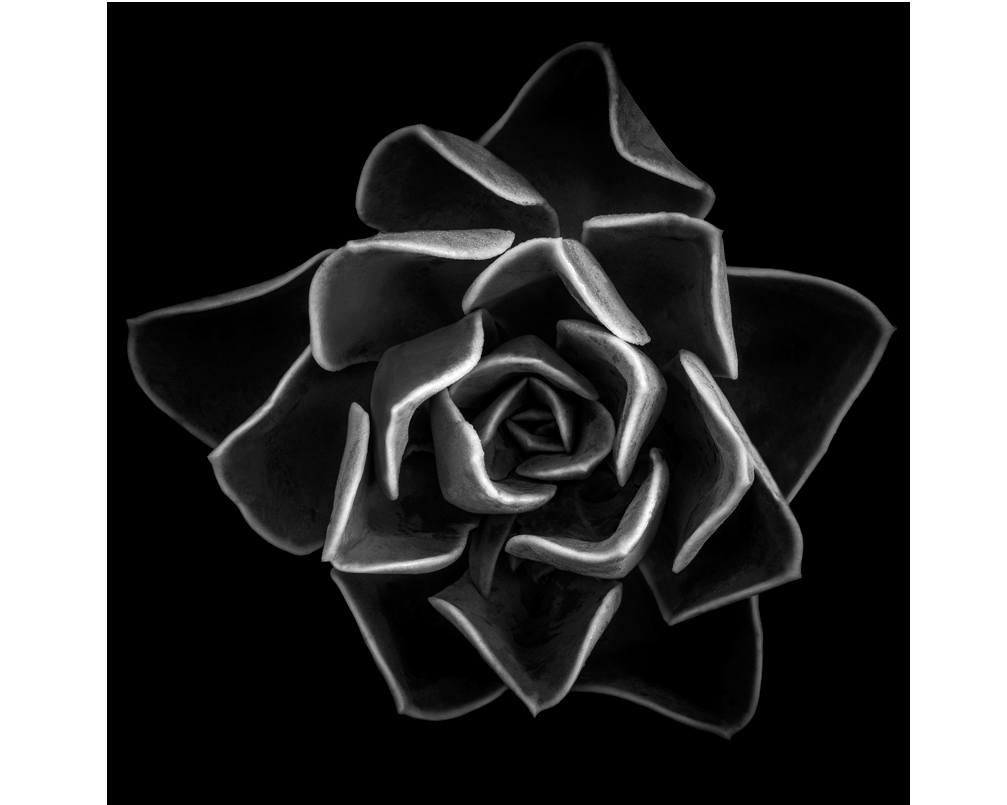
That’s when I decided to try something different: cropping the photo in an unexpected way, off-center.

In photography, repetitive patterns are often used to convey rhythm, harmony, and visual structure. Think tiled walls, rows of windows, stacks of crates, or fields of crops—these scenes naturally draw the eye with their order. But perfect symmetry, though satisfying, can sometimes feel predictable. That’s where off-centered composition breathes life into the image.

Photographing patterns off-center disrupts the viewer’s expectations. It introduces tension, energy. By shifting the frame just slightly—placing a break in the pattern toward the edge, or highlighting an imperfection in the sequence—you invite the viewer to pause and engage more thoughtfully. The eye searches for meaning in the irregularity. It asks, “Why this point of view?”—and in doing so, lingers longer.

When shooting repetitive subjects, experiment with framing that almost aligns, or place your focal element unexpectedly near the edge. Let part of the pattern escape the frame. Allow negative space to offset the repetition. These compositional risks often yield images that are both structured and surprising—quietly subversive, without losing the comfort of pattern.

In a world trained to see balance as perfection, the off-centered photograph reminds us that beauty also lives in the slight shift—the broken line, the skewed frame, the unexpected perspective.

Examples of balanced and unbalanced symmetric succulents can be found in my GeoGalleries collection “succulent leaf“.

______________________________

Wall Art Botanical Images

Wall Art Photography projects

Wall Art landscapes and miscellaneous

________________________________

9 responses to “Breaking the Pattern: The Power of Off-Centered Photography in Repetitive Designs”

  1. gsilvosatrekpix Avatar

    Wonderful idea, Alessandra!

    Liked by 1 person

    1. Alessandra Chaves Avatar

      Thank you.

      Liked by 1 person

  2. Steve Schwartzman Avatar

    The first part of the term off-center is English, and the second part comes from Latin (and before that Greek). The corresponding English word that’s fully of non-English origin is eccentric, i.e. ex-centric, which is to say ‘off-center.’ A photograph with its subject off-center can indeed be effective. On the other hand, off-center just to be off-center may be merely eccentric. Deciding between the two isn’t always easy.

    Liked by 1 person

    1. Alessandra Chaves Avatar

      Yes because now the two words have distinct meanings. I always learn something from these replies about origin of words.

      Like

  3. howg2211 Avatar
    howg2211

    I had a photography teacher that used to say if you’re going to crop then really crop, like you did. Meaning if you crop only a little slice off an object then it just looks like a mistake. But if you crop off a reasonable area it looks like a creative decision. Just make it a good creative decision as you did!

    Like

    1. Alessandra Chaves Avatar

      That makes sense. Don’t just cut the feet off.

      Like

  4. shoreacres Avatar

    The photos you’ve shared here remind me of times I’ve photographed opening flowers from the top down. While they aren’t symmetrical in the same way, it’s always tempting to present them perfectly centered; from time to time, I’ve moved away from that, and rather enjoyed it.

    It’s also true that I’ve changed my cropping in other ways. In the past, I would have presented this photo from my current post with the tree and vine in the middle of the frame, showing the entire trunk. Instead, I decided to move the trunk and vine to the side by cropping, and I liked the result.

    Like

  5. tierneycreates: a fusion of textiles and smiles Avatar

    Brilliant, I can immediately see how satisfying in a completely different way the off center image is! Centered images are lovely but that off centered image feels more “intimate” with the subject, not sure how to put it in words but hopefully I am making sense.

    Liked by 1 person

    1. Alessandra Chaves Avatar

      Thank you for your comments!

      Liked by 1 person

Leave a comment

Discover more from It is all about the light

Subscribe now to keep reading and get access to the full archive.

Continue reading