I think it was C.G. Jung who wrote that any person who goes through life without constructing or embracing a narrative about what we are here for, where we came from and where we are going, will have missed an opportunity. Not right or wrong, just a missed opportunity.
The same applies to photographers who insist on photographing only “what is there”. In photography, there is an emphasis on reproducing reality, even though the camera is only able to reproduce some of the reality we see and approximating the way we see it.
There are exceptions to a camera “seeing” more or less what we see, however. Think infrared, for example. We do not see infrared rays, but an infrared-converted camera is able to “see” what’s there and that image does not correspond to what our eyes perceive. Long exposure, obtained with the use of filters that cut off light entering the scene, is another example of allowing us to see differently, this time by applying a “time warp”.
Although certain forms of pre-processing or out the camera modifications of a scene are generally accepted in photography without discussion, alterations in post-processing are often looked at with suspicion, as if the photographer had “cheated”.
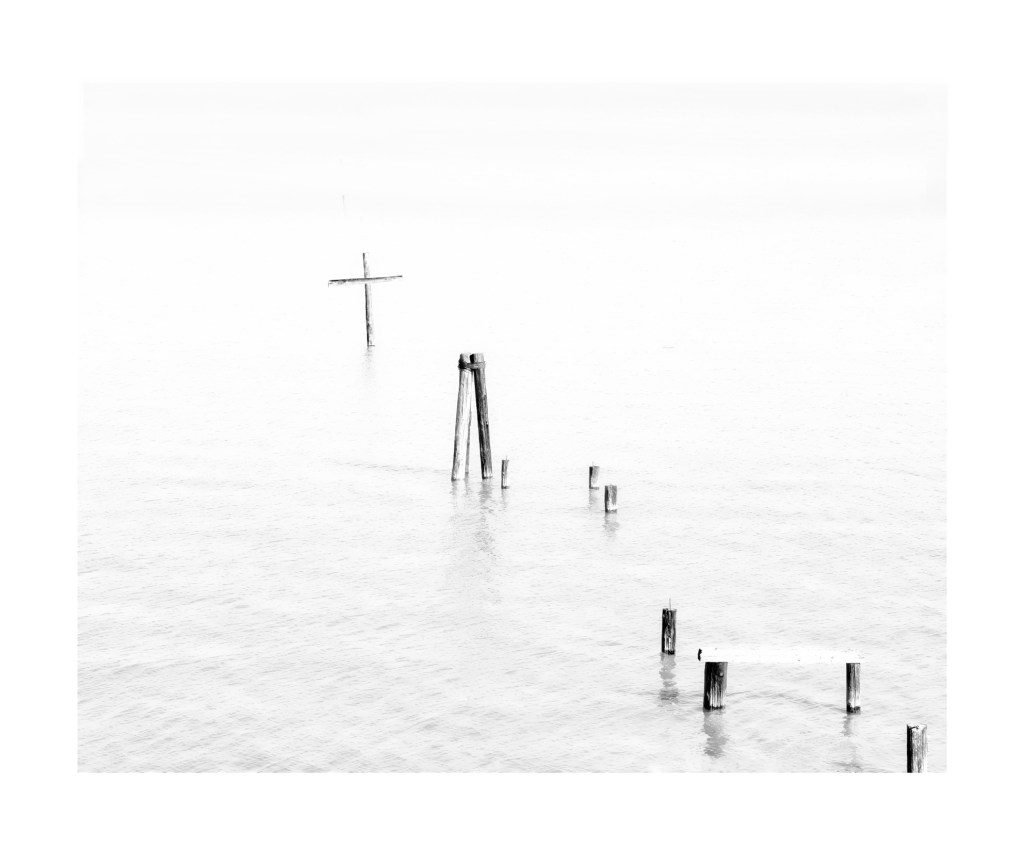
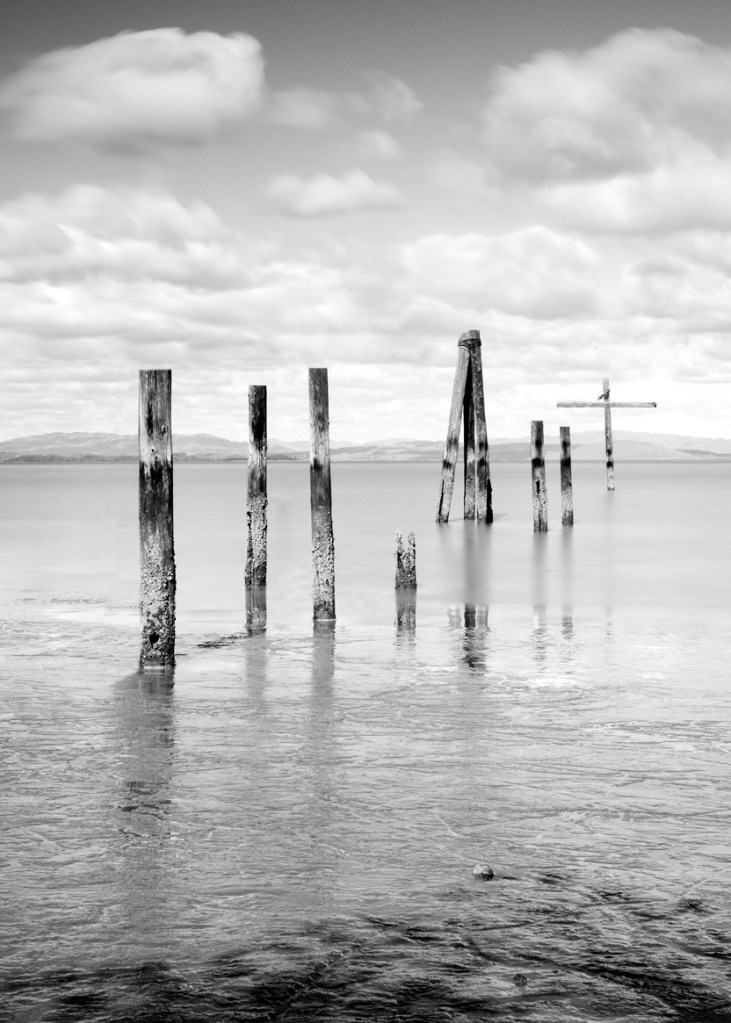
Both the featured photograph and the one below are examples of pictures that would raise an eyebrow and the question, was the scene reproduced accurately? Anyone walking along the shores of the San Pablo Bay may have come across this old pier sinking into the ocean, but I doubt anyone else saw what I saw. The two photographs were taken one year apart, in February 2020 and 2021.
______________________________
Wall Art landscapes and miscellaneous
________________________________


 It is all about the light
Leave a comment