
Nestled within the landscapes of Brazil there is a tree of profound historical and ecological significance: the “Pau Brasil”. Paubrasilia echinata holds a unique place in Brazil’s identity, economy, and environmental heritage.
A Name Rooted in History
When Portuguese explorers arrived in the early 16th century, they were captivated by the the vibrant red heartwood of “Pau Brasil”, which produced a highly sought-after dye. Known as “brasilein,” this dye became a valuable commodity in European markets. The abundance of this tree along the coast led to the country being named “Brasil.”
For decades, the “Pau-Brasil” was harvested extensively, fueling the colonial economy and becoming one of the first examples of large-scale environmental exploitation in the Americas. Unfortunately, this overharvesting led to a dramatic decline in its population, and today, the Pau-Brasil is listed as endangered.
Modern Conservation Efforts
Recognizing its cultural and ecological value, conservation initiatives have emerged to protect and restore Pau-Brasil populations. Organizations like the Instituto Árvore do Brasil and various government programs are working to reforest areas with native species, including Pau-Brasil. These efforts aim to reconnect fragmented habitats and bolster biodiversity.
In addition, the tree has found a new role in the modern world: as the preferred wood for crafting high-quality violin bows. Its dense and elastic properties make it unparalleled for this purpose, further emphasizing the need for sustainable management of its resources.
Why It Matters
The story of the “Pau Brasil”serves as a powerful reminder of the intersection between natural resources and human history. It highlights the consequences of unsustainable practices and underscores the importance of conservation. By protecting this iconic species, we not only preserve a living symbol of Brazil’s heritage but also contribute to global biodiversity.
Did you know? The vibrant red dye from “Pau-Brasil” was so prized in the 16th century that it was referred to as “Red Gold.” Conservationists today often call the tree a “living treasure” for its dual cultural and ecological significance.
The FEATURED IMAGE
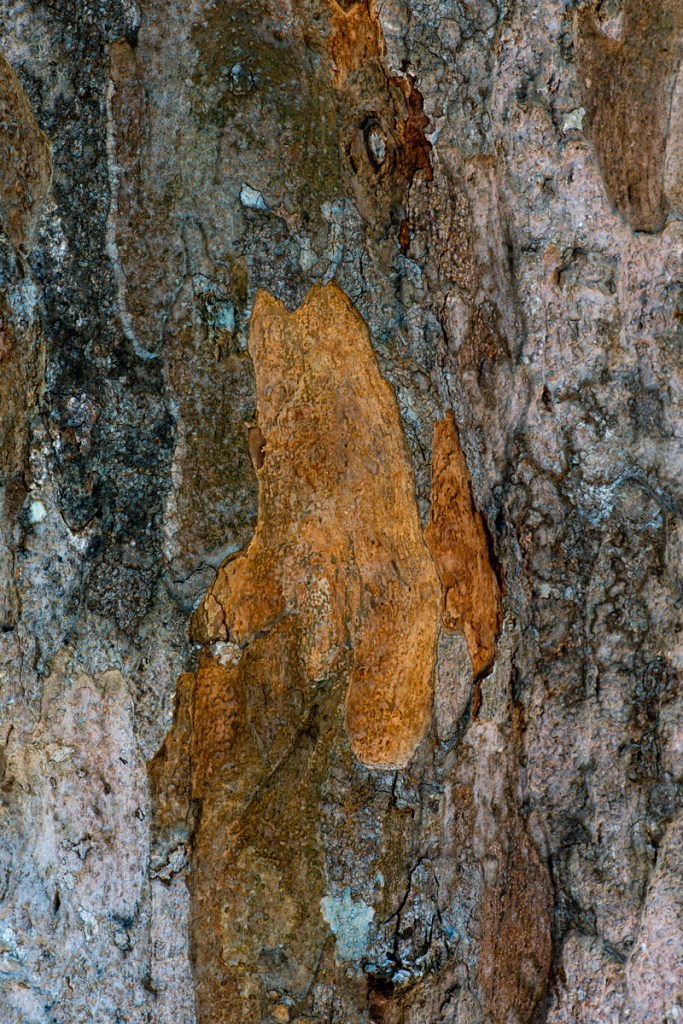
The FEATURED IMAGE (f/10, 1/250 s, ISO 1250), repeated below for convenience, is an abstract close-up of the bark of a “Pau-Brasil” tree. I took it last time I was in Rio de Janeiro.
I have other bark images in my collection “Tree Bark” . The collection also features lichen, the surface and bottom of water bodies, foliage and flowers.
Textures and patterns are everywhere, and they are accessible to almost any photographer with a cell phone and a bit of imagination. They can be turned into appealing pieces of wall art that are politically neutral, colorful and upbeat. They look great in alternative print media such as acrylic, metal and wood.
______________________________
Wall Art landscapes and miscellaneous
________________________________


 It is all about the light
Leave a reply to shoreacres Cancel reply