The Dickens Fair
The Dickens Fair is a vibrant, immersive holiday event that brings the world of Charles Dickens’ Victorian England to life. Set in a sprawling recreation of 19th-century London, it offers visitors an enchanting mix of costumed performers, themed shops, lively entertainment, and traditional food and drink. Guests can wander cobblestone streets filled with characters like Ebenezer Scrooge and carolers, enjoy theatrical performances, or participate in festive dances. Whether savoring a cup of mulled cider or browsing handcrafted gifts, the fair captures the warmth and wonder of the holiday season, making it a cherished tradition for all ages.
Photography at the Dickens Fair
The event presents unique challenges: low light, mixed lighting, and crowded scenes.
My go-to gear for the festival has been the Nikon Z50 paired with the Z Dx 16-50mm f/3.4-f/6.3 kit lens. In a previous post, I explained my preference for the Z50, particularly for its compact size and discreet design. The kit lens, however, isn’t adequate for low-light conditions,
This year, I tried something different: instead of taking the kit lens, I took my Nikkor Z 24mm f/1.8, an excellent prime lens. On the Nikon D50, which is a crop sensor camera, the focal length of this lens is 36mm.
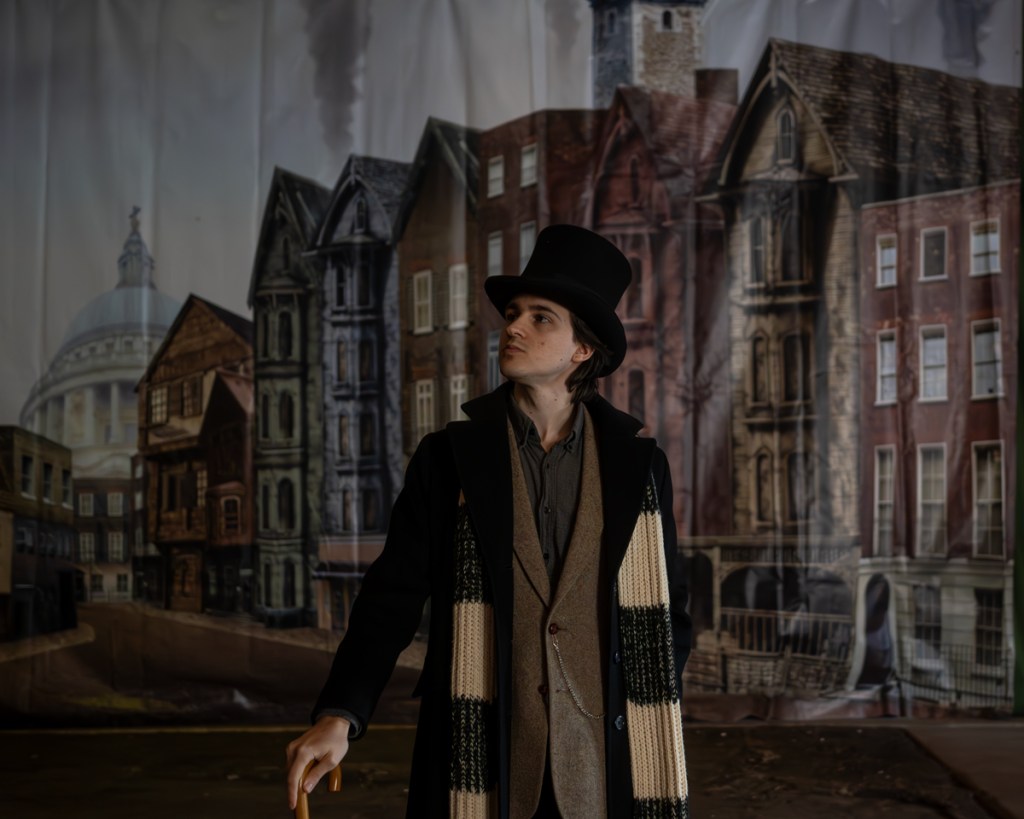
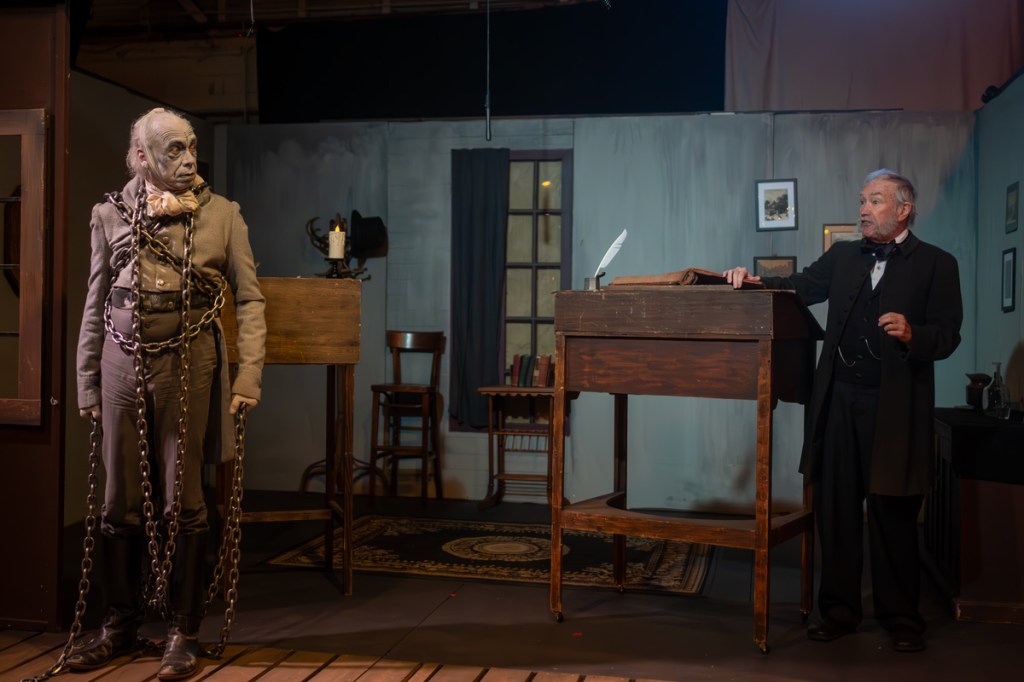
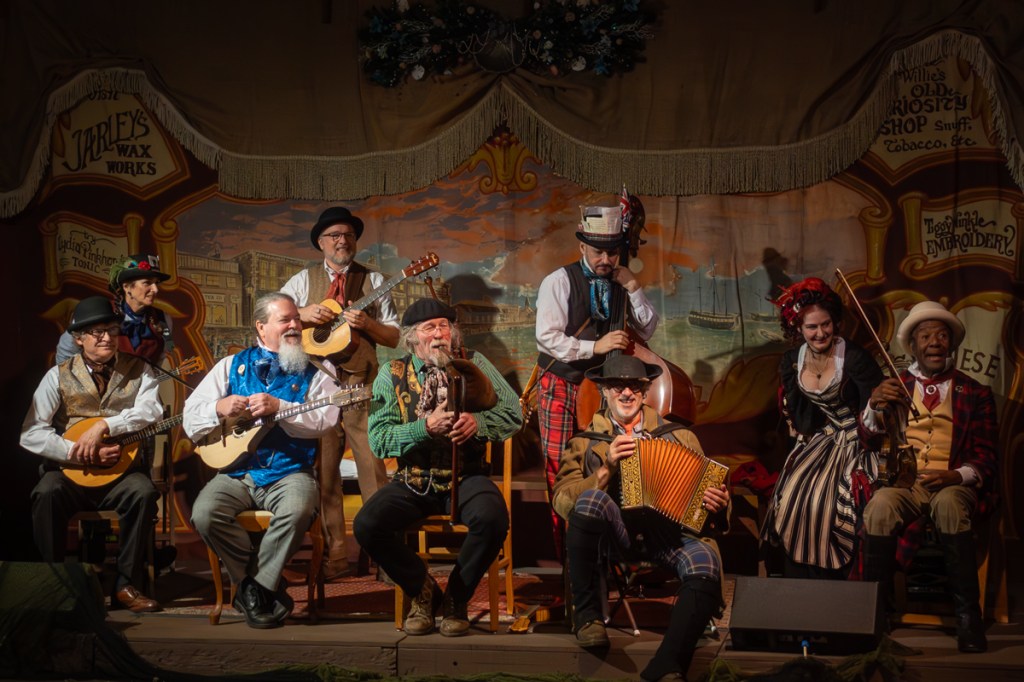
Thanks to modern advancements in artificial intelligence, noise is no longer a major limiting factor in photography. For the photos below, I used f/1.8 and ISO settings between 1,250 and 2,000, while maintaining a shutter speed of around 1/60. The images, which were noisy, benefited from Adobe Camera Raw’s AI-assisted denoise. The results are impressively clean, and acceptably sharp.
Click on the images to see them larger.


Shooting wide open-a few tips
One thing to keep in mind when you are shooting wide open is that you will not have much depth of field (D.O.F.). Stepping away then cropping will give you more D.O.F. than trying to photograph from close. When photographing a person, focus on the eye closest to the camera, and when photographing groups of people, or objects, focus on those in the foreground. It is more natural to observe things going gradually out of focus, than to have the background elements in focus while the foreground is out.
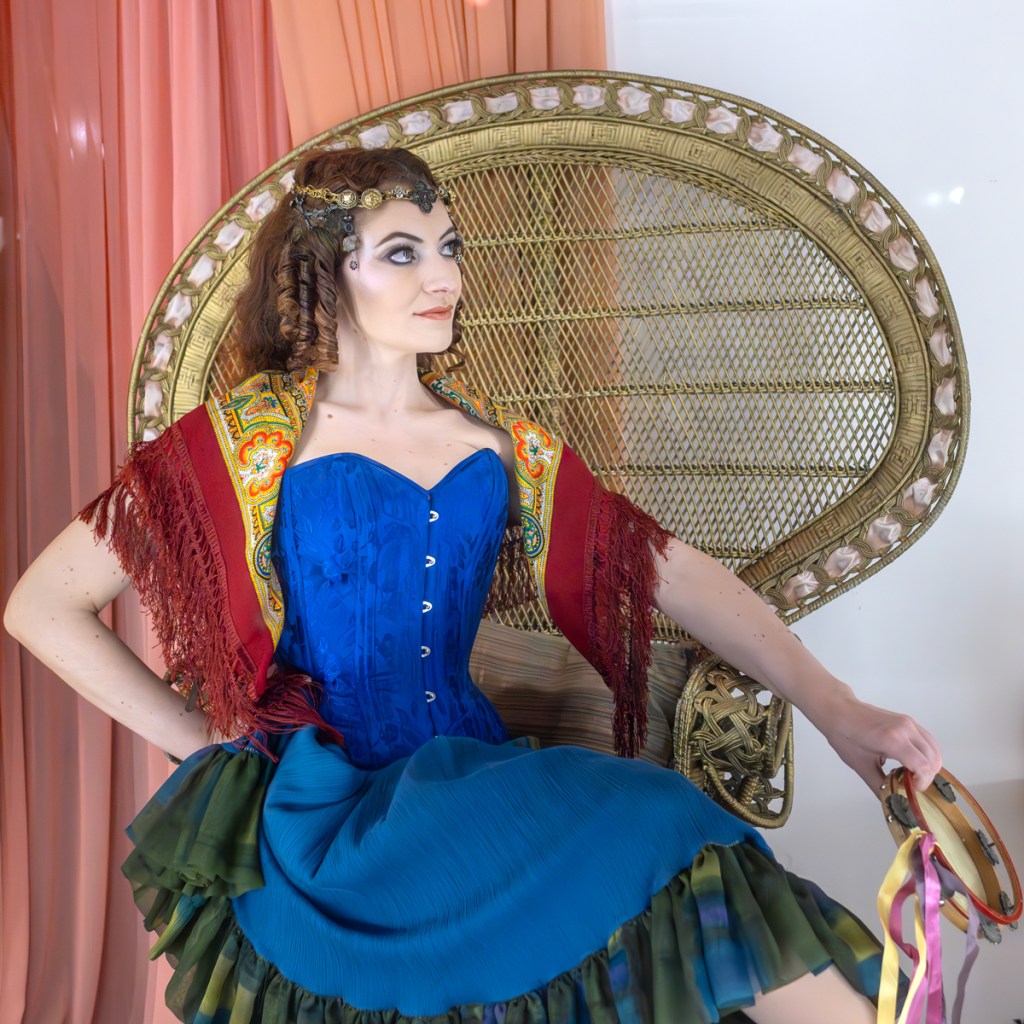
The FEATURED IMAGE portrays a live model inside the window of a shop. Note that for the times, she had a lot of skin showing, and that she is showing a portion of her leg, something that, during the Victorian era (1837–1901), was considered taboo .
______________________________
Wall Art landscapes and miscellaneous
________________________________


 It is all about the light
Leave a reply to howg2211 Cancel reply