
It has taken me a a long time to decide to write this post because I thought I was not ready to talk about Edward Steichen. But I eventually figured out that I will never be ready to talk about Steichen, so why not introduce my followers to this book now that I can do it? Then each of you can go and make your own discoveries about this important figure in photography.
A good summary of Steichen’s life and endeavours can be found on this Wikipedia link and I will try not to repeat the information you can find there. Steichen was a central figure in the development of photography as an art form, and I think every photographer needs to know about his story and accomplishments.
Read the Book
I have the hardcover version. The plates are top quality, the font size is relatiely large (good for those of us who are getting older) and the text is easy to read. The book can be found used for less than 10 U$, google it to find the best price and deal for where you live. Here is a link to one selling Amazon as a reference.
Steichen, A Life in Photography, is narrated in the first person, by Steichen himself. It covers his journey from 1895, when he acquired his first camera at the age of 16, up to 1959, when he was 80 years old. Some interesting highlights in the book are his relationship with the apparently difficult photographer Alfred Stieglitz, which spans a number of years and yields a handful of funny observations made by Steichen thought the book; his friendship with August Rodin; and his participation in the first war as a photographer.
Steichen’s private life is not the main theme of the book, he lets very little out, except for the stories behind the photographs, his professional clubs, contests, shows. The political climate surrounding the WWI, and it’s effects on the arts and lives of artists, are also tangentially mentioned.
Steichen was primarily a portrait photographer, and that’s how he made most of his earnings in photography. For that reason perhaps, portraits dominate the book. Among the famous people he photographed are August Rodin, George Frederic Watts, Edward Everett Hale, John Pierpont Morgan, Henry Matisse, Charles Chaplin and, of course, himself. These portraits, and many more, are represented in the book.

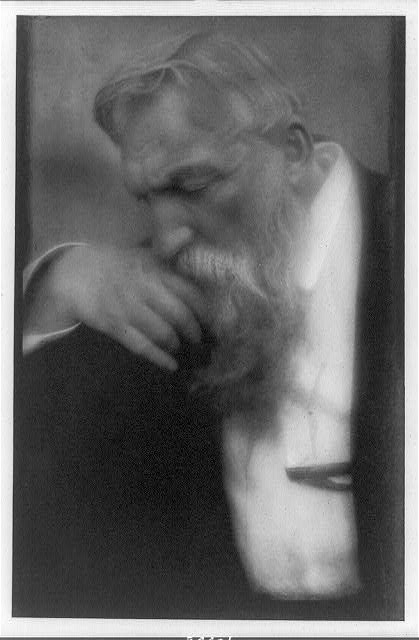
Being a portrait photographer did not discourage Steichen from experimenting. In the first pages of the book, he honors his readers with a few photos we would call, today, “impressionist.” He writes:
“During those teenage years, I knew, of course, that trees and plants had roots, stems, bark, branches and foliage that reached up towards the light. But I was coming to realize that the real magician was light itself- mysterious and ever-changing light with its accompanying shadows rich and full of mystery. The haunting, elusive, quality of twilight excited in me an emotion that I felt compelled to evoke in the images I was making. Emotional reaction to the qualities of places, things, and people became the principal goal of my photography. By 1898 I was more or less in cotrol of the rendering of those moods and moments. I was an impressionist without knowing it.”
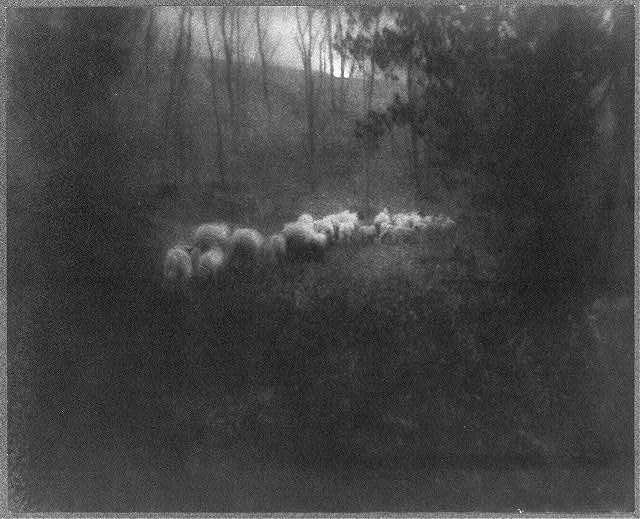
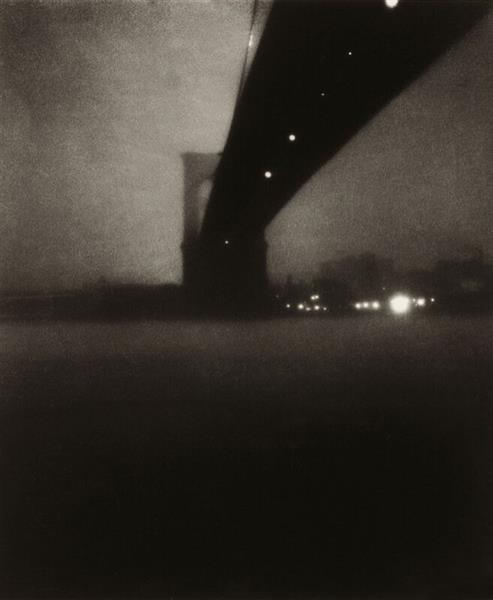
Although underrepresented in the book, and perhaps in Steichen’s life as a photographer, still life photographs and close-ups of plants and animals, as well as a few architectural photographs, are shown. Very unfortunately I am not able to post most to them here because there are still copyright restrictions on them, which I don’t completely understand.
Summarizing, if you appreciate the very best in photography, and want to know more about Steichen, the history of photography, and how photography has become accepted as an art form, this book is for you. Get it, read it. You will not regret.
Reference
Steichen, E (1963). A Life in Photography Hardcover – Published in collaboration with the Museum of Modern Art. Doubleday & Co. Inc., New York.
______________________________
Wall Art landscapes and miscellaneous
________________________________


 It is all about the light
Leave a reply to Steve Schwartzman Cancel reply