Introduction
In anticipation of the color changes, some of which are already happening in higher altitudes, I take the chance to introduce my WEST COAST AUTUMN COLLECTION, featuring Northern California’s typical natural and urban fall landscapes. The collection includes a few iconic places such as the Hope Valley cabin and Sorensens’ Resort, as well as Sierra Nevada’s landscapes, a few locations within the greater Sacramento area, and three images form Ashland, just past the Oregon border. The images are available as fine art prints, greeting cards, and other types of merchandise.
If you want to learn more about the native tree diversity that characterizes the Northern California Autumn colors, keep reading.
Native Trees that compound Northern California’s fall colors
California Black Oak (Quercus kelloggii)
One of the first trees change colors is the California Black Oak. Its deeply lobed, dark green leaves gradually shift to vivid shades of red, orange, and bronze during the fall. These trees are a common sight in the Sierra Nevada foothills and the Coast Range.
Bigleaf Maple (Acer macrophyllum)
The Bigleaf Maple, with its enormous, beautifully shaped leaves, is a deciduous giant found in the coastal regions of Northern California. When autumn arrives, the leaves turn vibrant hues of yellow and gold, casting a warm, inviting glow across the forested landscapes and riverbanks. They are particularly common surrounding redwood groves in Northern California.
California Sycamore (Platanus racemosa)
The California Sycamore is a stately native tree known for its distinctive mottled bark and expansive, lobed leaves. In fall, these leaves transition from their usual green to shades of yellow, creating a contrast against their trunks and the blue skies of Northern California.
Western Sycamore (Platanus occidentalis)
Often found along riverbanks and creek sides, the Western Sycamore boasts large, palmately-lobed leaves that turn a brilliant mix of orange, red, and yellow during the fall. These trees add a touch warmth to the riparian areas of Northern California, creating stunning autumn vistas.
Black Cottonwood (Populus trichocarpa)
The Black Cottonwood, a towering tree found along streams and rivers throughout the region, stands out with its bright yellow leaves in the fall. As their leaves change, these trees infuse Northern California’s riparian areas with a pop of golden color that contrasts beautifully with the surrounding greenery.
Vine Maple (Acer circinatum)
In the cooler, shaded pockets of Northern California’s forests, the Vine Maple can be found. This small tree’s delicate, circular leaves turn shades of red, orange, and yellow in the fall, creating a stunning understory of color in the woodlands.
Aspen Trees (Populus tremuloides) in the Sierra Nevada
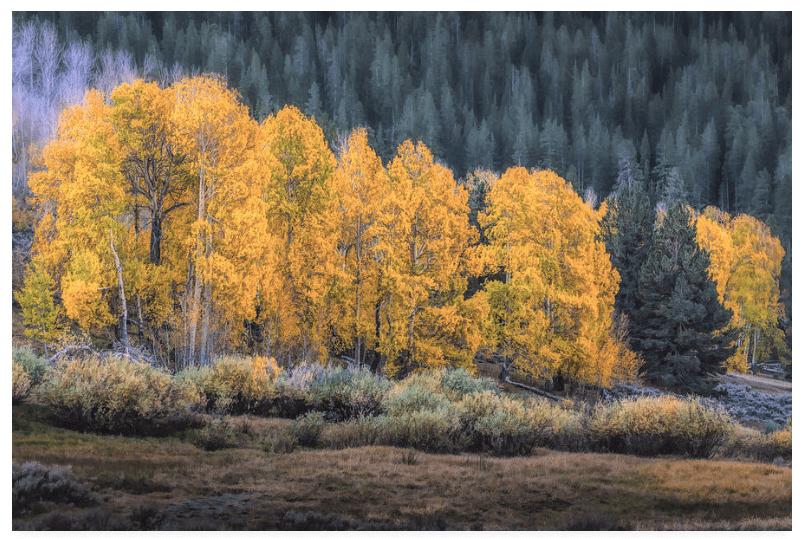
The Sierra Nevada is home to one of the most iconic displays of fall foliage in Northern California, the Aspen trees. These slender, white-barked trees create a contrast against the rugged mountain landscape. In the fall, their leaves turn golden yellow.
Story behind the FEATURED PHOTOGRAPH
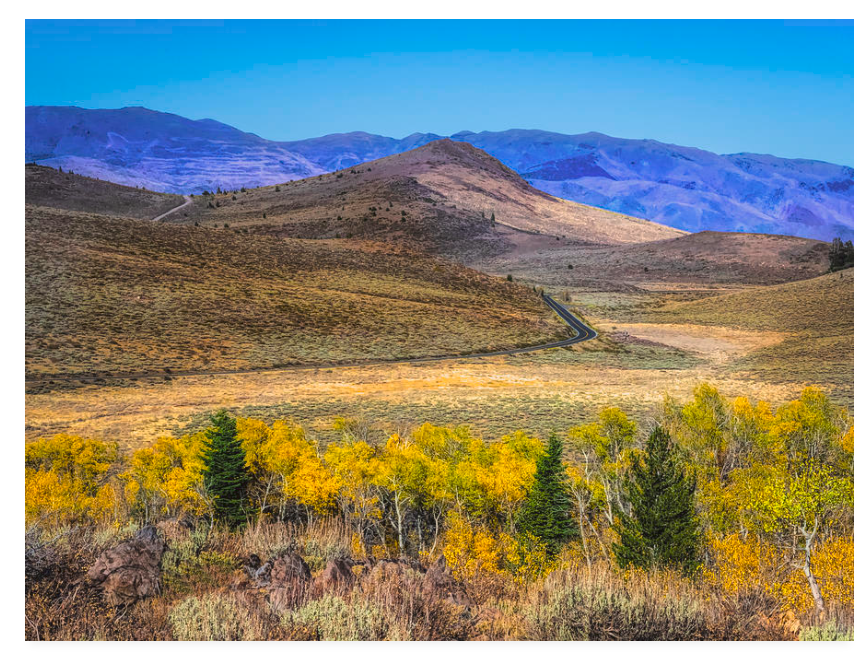
My friend and I were following the google maps of fall colors, and one patch was indicated on the Monitor Pass, accessible through a narrow dirt road, California, USA. The place did not disappoint but it was a patch of trees against a hill. Looking back, however, behind us, there was highway 89 leading the eye towards a sea of mountains….
Conclusion
Northern California’s native fall colors are a testament to the region’s biodiversity and stunning landscapes. From the reds of the California Black Oak to the golden hues of the Bigleaf Maple and the beauty of Aspen trees in the Sierra Nevada, these native trees come together to create a beautiful captivating scene.
______________________________
Wall Art landscapes and miscellaneous
________________________________


 It is all about the light
Leave a reply to Alessandra Chaves Cancel reply